DERMATOLOGIST FOR ADULTS AND CHILDREN • VENEROSILOGIST
Menu
Full 1
Reliable & Scientific
Full 1
Prevention & Treatment
Full 1
Diagnosis & Proper Therapy
The Doctor
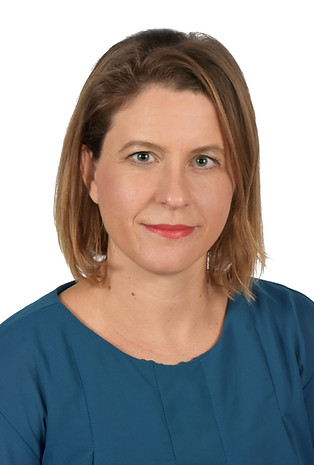
Doctor Fragkiski Tsatsou was born in Thessaloniki in 1978. She graduated from the School of Medicine of the Aristotle University of Thessaloniki in 2005, with the grade of “Very Good”. She holds a degree in Biology and a master’s degree in Molecular Biochemistry. She trained at the Pathology Clinic of the Hospital for Special Diseases of Thessaloniki. She specialized in Adult and Pediatric Dermatology and Venereology at the Department of Dermatology, Venereology and Allergology and the Immunology Center of the Dessau Hospital of the Brandenburg Theodor Fontane Medical School in Dessau, Germany. Trained in Clinical Dermatology for Adults and Children, Venereology, Allergology, Immunodermatology, Dermatosurgery. As part of her thesis, she investigated the pathophysiology of acne inverse/diapyutic hidroadenitis.
From 2012 until today, she runs a private practice in the center of Thessaloniki, located at 22 Mitropolitou Iosif street, from where she provides high quality medical services in Clinical, Aesthetic Dermatology and Venereology. Since 2011, she has been working as an academic associate at the 2nd Clinic of Skin and Venereal Diseases, AUTH, at Papageorgiou General Hospital of Thessaloniki. She participates in a number of clinical studies of new pharmaceutical agents, in the training of specialist Dermatologists-Venoretologists and in the teaching of Medicine and Dentistry students.
She has publications in international journals, has written chapters in international books on Dermatology-Venoresiology and a large number of announcements in international and Greek dermatological conferences. Fragkiski systematically participates in Aesthetic Dermatology post-educational seminars on new techniques and treatments and holds certification from European authorities.
She is a member of international and Greek scientific authorities of Dermatology-Venoresiology.
The doctor speaks English, German, French and Spanish.
Clinical Dermatology
Proper information, prevention, early treatment
DERMATOLOGICAL SURGERY
Invasive procedures that are sometimes required to diagnose and treat skin conditions are performed in the doctor’s office under local anesthesia.
Diagnostic skin biopsy, nevi removal, surgical removal, with carbon dioxide laser, with diathermocoagulation or diathermoablation of benign skin lesions (seborrheic keratosis, papillomas, solar lentils, cherry-colored hemangiomas, actinic hyperkeratosis) and small malignant lesions (basal cell or squamous cell carcinoma, melanoma, cutaneous lymphoma).
CRYOTHERAPY | CRYO SURGERY
Destruction of skin and mucous membrane lesions with liquid nitrogen.
SKIN ALLERGIES
INVESTIGATION OF ALLERGIC SKIN DISEASES
Performing skin tests (patch test) & blood tests to look for factors that cause or worsen allergic contact dermatitis, atopic dermatitis (eczema) or other conditions, such as urticaria.
DERMATOLOGY
Dermatoscopy is a safe and painless method of diagnosing and monitoring moles and other skin lesions. It is suitable for all ages in congenital or acquired moles that require follow-up. The dermoscope has a high resolution and clarity lens, which allows the recording of suspicious lesions and gives the possibility of re-checking and comparing the images over time. This way, the evolution of suspicious moles is assessed and minimal changes are recognized, leading to early removal with an excellent prognosis in the case of melanoma, while avoiding the removal of harmless moles. Regular repeated examinations allows early detection of new or changing moles or skin cancers. Annual mole screening is mandatory in the adult general population according to international guidelines. In high-risk groups, instructions are individualized.
Pediatric Dermatology
DIAGNOSIS AND TREATMENT
of skin diseases on newborns, infants, children and adolescents.
WE PROTECT
the skin of our children, we prevent by being informed.
Diagnosis and treatment of manifestations or diseases in newborns, infants, children or adolescent skin, its appendages (hair, nails) or mucous membranes.
Skin irritations, eczema, viral or bacterial diseases are common in childhood. Usually their image differs from that of adult skin.
Our clinic has experience in handling children’s skin of all ages, a friendly environment and child-friendly staff. We aim for excellent collaboration with parents, counseling parents and children on skin care and the use of safe treatment options.
Aesthetic Dermatology
APPLICATIONS
Botulinum toxin
HYALURONICAL ACID
PEELING
MESOTHERAPY, MICRONEEDLING
FRACTIONAL LASER
MICRODERMABRASION
TREATMENT OF CELLULITE / LOCAL FAT
PRP (PLATELET-RICH PLASMA)
LIGHT REJUVENATION
SCLEROTHERAPY OF VESSELS OF THE LOWER EXTREMITIES
PHOTOTHERAPY OF ONYCHOMYCITIS
TATOO REMOVALS
IPL HAIR REMOVAL
FACIAL THREADS
WE AIM ON IMPROVING THE HEALTH AND IMAGE OF THE SKIN
The application of aesthetic treatments aims to rejuvenate the skin of the face or body in women and men. After analyzing the needs and desires of the individual, we choose the appropriate method or combination of them based on the skin type, history, aesthetics and expectations.
Venereology
Diagnosis and treatment of sexually transmitted diseases in women and men.
These diseases are found mainly in the skin of the perinatal area, but also in the mucous membranes of the external genitalia, the anus and the mouth. Some are very common and are also transmitted by healthy vectors.